
Designed for long life and circular value

Long life cycles significantly reduce environmental impact. Radioshuttle™ is engineered for durability, serviceability and circularity. 

The construction is robust and designed to deliver reliable performance for many years. Modules can be replaced and serviced, and technology can be upgraded when needed. Circular design practices are integrated throughout development to minimize waste and to keep resources in use for as long as possible. 
People

Safe, ergonomic and predictable work environments

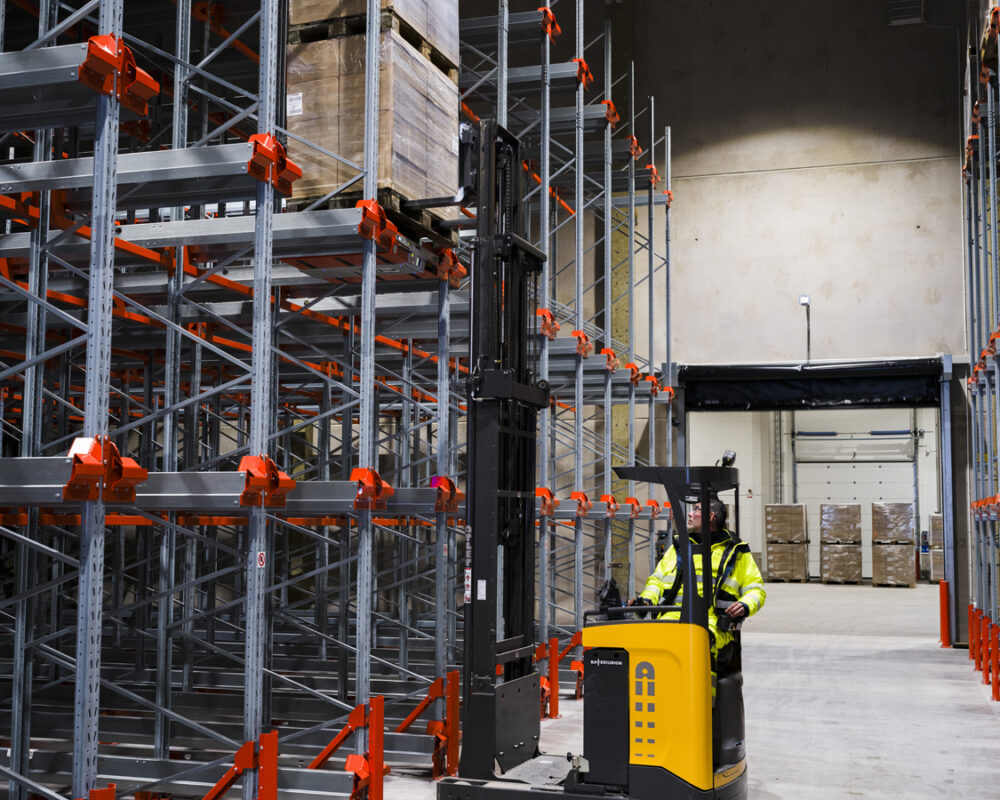
Sustainability is always about people. Radioshuttle™ improves workplace safety by limiting manual handling, reducing forklift traffic and minimizing the time employees spend in extreme temperatures. 

This contributes to safer workflows, more ergonomic conditions, fewer collision risks and more predictable operations. We also maintain a safe and inclusive working environment in our own production and take responsibility throughout our supply chain. 

Planet

Responsible materials

A significant part of a warehouse system’s climate footprint comes from steel. Material choice is therefore one of our most important sustainability measures. 

We prioritize Swedish steel along with recycled and reused materials and fossil free alternatives. Since spring 2024, all Radioshuttle™ chassis are produced using SSAB Zero™, a fossil carbon emission free steel made from recycled steel and fossil free energy. This provides high structural strength combined with a significantly lower climate footprint. 

Our product design supports circular flows through components that can be maintained, repaired and upgraded. This extends product lifetime and reduces the need for new material. 

Profit

We convert space into business.

Lower CO₂ emissions through smarter use of space. Efficient storage is one of the most effective ways to reduce operational emissions. Radioshuttle™ increases storage density, allows for smaller warehouse footprints and reduces internal transport. 

This leads to lower energy consumption, reduced heating and cooling requirements, fewer forklift movements and improved safety in daily logistics.